The Impact of Extreme Heat on Education: A Case Study in Paraguay
Climate change represents a significant global challenge, affecting multiple sectors, including education. According to the World Bank report “Choosing Our Future: Education for Climate Action”, education can play a key role in mitigating and adapting to these effects. However, the report also warns that educational systems are exposed to climate change risks, which can deepen existing inequalities, especially in developing countries.
Education as a Tool for Climate Action
The report highlights that education is the most relevant factor in raising awareness about climate change. It is estimated that an additional year of education increases this awareness by 8.6%. In Brazil, for example, 84% of people with secondary or higher education consider climate change a threat, compared to 62% among those with lower educational levels. This pattern reflects the importance of education in understanding and taking action against environmental challenges.
The Challenges of Climate Change in Education
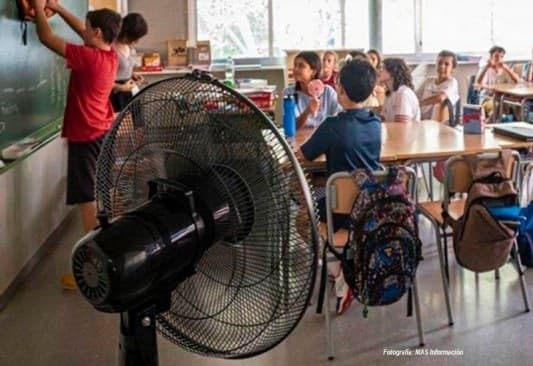
Between 2022 and 2024, around 404 million students in 81 countries experienced disruptions to their education due to extreme climate events such as heat waves, storms, and floods. Learning losses vary according to each country's economic level: in low-income countries, schools closed for an average of 18 days per year, while in high-income countries, the loss was only 2.4 days. In Paraguay, high temperatures and deficient school infrastructure make learning difficult, as many classrooms lack adequate ventilation or climate control systems.
The Challenge of Green Education in Developing Countries
The report also indicates that Latin America faces a gap in green skills, making the transition to a sustainable economy more difficult. It is estimated that the global ecological transformation will generate 100 million new jobs and require the relocation of 78 million workers whose jobs will disappear. However, many educational systems have not yet adjusted to this emerging labor demand.
Follow us on Instagram.Climate Policies in Paraguay
Paraguay has been implementing its National Climate Change Policy since 2011 through the National Directorate of Climate Change (DNCC). This strategy seeks to align the country's priorities with international sustainability commitments. Nevertheless, greater efforts are still needed to improve school infrastructure and promote environmental education at all levels.
The Need for Immediate Action
Investing in quality education and adapting school infrastructure is crucial to mitigate the effects of climate change and prepare future generations. Education not only strengthens community resilience but also contributes to economic and social development. Taking action now will ensure a more sustainable and equitable future.
El artículo en español aquí.Titulares

Obra teatral Yerma llega con tres únicas funciones a Sala La Correa

Tras críticas, Fiscalía designa equipo para investigar “campaña sucia”

Amenaza de tiroteo en colegio privado moviliza a autoridades

¿Subirán impuestos a vapeadores y tabaco?

Ratifican juicio a Hugo Javier por desvío millonario
Lo más leído
- Buses eléctricos llegan con pasaje a G. 3.400
- Tras críticas, Fiscalía designa equipo para investigar “campaña sucia”
- Liberan a Almir de Brum tras meses de cautiverio en manos del EPP
- La Albirroja usará por primera vez su camiseta titular ante Australia
- Desvíos en Silvio Pettirossi coincidirán con las internas partidarias
- Obra teatral Yerma llega con tres únicas funciones a Sala La Correa